In today's post he planned to continue with the theme of new technologies, As you have seen, It is lately becoming increasingly important in the blog.
But while I drank coffee this morning, I was reading the interview that 2010 Ken Robinson made for the Vanguardia.com and I felt the need to reflect on an issue that concerns me a lot.
Creativity is a topic we all talk about, most people defend creativity tooth and nail, They talk about the importance of our little ones being creative people., let them express themselves, they move, but at the moment of truth, when putting into practice a creative methodology, neither parents nor schools develop a true creative educational method. Al final, The important thing is that we all meet the standards that society has given us, that we read at a certain age, that we add to a certain age, that we know algebra at a certain age. Then, I wonder, where is the creativity? Are we, perhaps, respecting each child's own natural rhythms?? The answer to these questions is NO.
I see education today as a huge river, a river with a great flow that we entered as soon as it was born. All along our path there are branches that we can hold onto, branches that can be pedagogues, parents or schools, but branches that can take us out of that set of water particles. We know that the moment we hold on we will no longer be part of that “everything” we will be free and autonomous, capable of developing a life for ourselves. Don't you think that considering the moment our labor market is going through, it is absolutely necessary that we get our little ones out of this wheel in which they are going to find themselves stuck??
Returning to the Sir Ken Robinson interview, I am going to comment on some of the aspects that I have talked about and, of course, I hope you give me your opinion.
Robinson comment that “Every child is an artist”. On this point I completely agree with him.. I have the privilege of being able to work with children of 4 years old, children who are not yet conditioned by the society in which they live, who freely present their own ideas, who express what they feel when it comes to their mind, who express their desires and concerns through their drawings without fear of being judged. This is something that, Unfortunately, with the passage of time it is lost.
Both at school and at home we teach them that they should not paint like that or that instead of painting they should read to practice because their little friends already read the “p”, What if we are dealing with an artist?? Maybe that child will be the next Picasso and we are restricting that development. As Picasso said: “Since I was a child I painted like Rafael, but it took me a lifetime to learn to draw like a child”. Let's let our little ones paint like children.
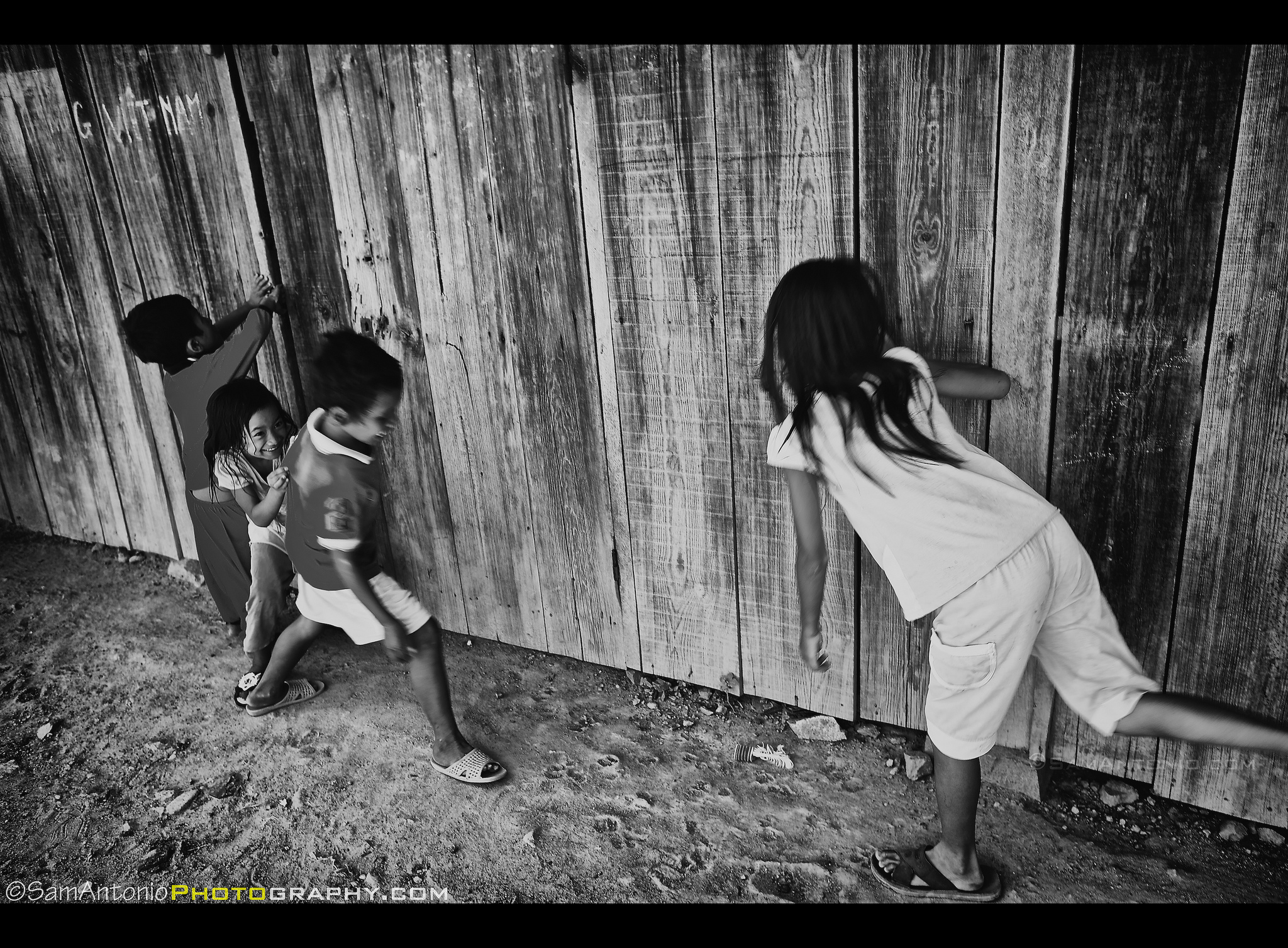
photo credit: Sam Antonio Photography via photopin cc
Robinson raises another issue that, surely, many pedagogues will have tried on countless occasions, “the exams”. Like Robinson, I am not against exams., But I do believe that as soon as there is a moment of “evaluation” we are putting a limit on creativity., generally those moments encourage copying, imitating to pass. When we set a scale and there are students who do not pass it, What we are promoting is that those students who do not pass, look for ways to pass it. I see it even with my students 4 years old. At first, When I wanted to “evaluate” them, I asked them as an “exam” the vocabulary we had worked on., This generated moments of rejection and generally the students waited for another classmate to tell them.. Logically we cannot generalize, There are also those students who, from a young age, are competitive by nature and whose goal is to be the best..
Now what I do is an indirect “evaluation”, through the game, in which they believe that they are the ones in control of the situation, I take advantage of the moments in which they are playing to put into practice the vocabulary that we have worked on and see how it has affected them.. I can assure you that the results are much better..
Going back to the exams, I think the problem is not the exams themselves., I think the problem is the global method we use.
Our educational system is a system based on transferring ideas from one individual to another., usually from teacher to student, later “capture” those ideas on paper: exams, which means that the knowledge we acquire does not last more than 6 months or a year, worrying, Truth?
Obviously there are many theories and pedagogical trends that try to find alternative ways to this system., The other day I watched a video of David Gagnon of the University of Wisconsin-Madison, which spoke of “situated learning” or situated learning, developed by Lave and Wenger in 1991. This type of learning is based on the learner's participation in a community of practice., that is to say, in a cultural context, social, of relationships, from which the necessary knowledge is obtained to transform the community and transform oneself. If you remember the Edgar Dale's Cone of Experience which we have already talked about on occasion, after two weeks we remember the 90% of what we do and live, therefore, Aren't these learnings much more effective so that the knowledge lasts in the individual for longer??
In his interview, Robinson comments that creativity can be learned, at this point, I would like to make a point. Personally, I consider that the creativity, more than learned, should not be lost.
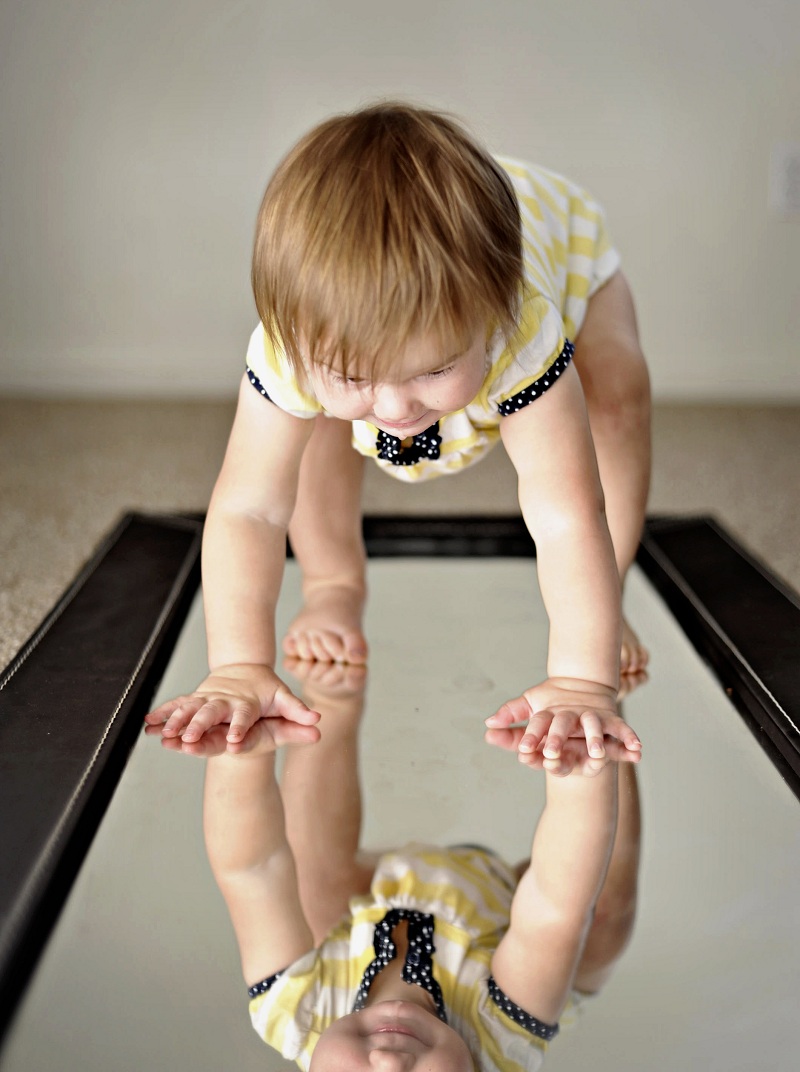
We are all born with a lot of intrinsic motivation, something that moves us to know the world and develop all kinds of “strategies” to know it. These strategies, in one way or another they are creative, but, We return to what we have already mentioned before, Suddenly we arrive at school and they tell us that those strategies that we had been “developing” are not worth it., that we should do things like everyone else, conform to what is purely established. Thus, that creativity with which we were born, is lost. I agree with Sir Ken Robison that you can recover and learn, but, Wouldn't it be better not to lose it??
I leave you several questions in the air for us to reflect on.. With this post what I want is for us to see the good things that our little ones and not so little ones have, that we try not to compare them with others, Let's try to see what type of intelligence characterizes them because I assure you that everyone has one that makes them special and unique..
Promote that intelligence, those skills that make your child or student special, do not get carried away by what “should be”. Al final, education is a matter of common sense, and many times our common sense is much more coherent than that of those who direct us.
As usual, thanks for your time.
Kisses to all,
“All people have the willingness to work creatively. What happens is that most never notice it.”
Truman Capote
 1
1 0
0 20
20
 20
20Tags: alternative, situated learning, creativity, developing, Education, Ken Robinson, new school, situated learning
 Español
 English
 Français
 Deutsch
 中文(简体)
 Português

I totally agree with everything you've said..
This morning I saw a photo of a child's work, a job that overflowed creativity, but it was corrected with a zero because the teacher didn't like it. That child will not want to show his ingenious ideas other times since they will be thrown back..
It seems sad to me that we run away with creativity like this…let's give wings to that creativity
Thank you for your contribution Nuria, I find what you say very interesting..
I hope teachers start to catch on to these ideas and together we start doing something..
A hug,
Cristina
Hi Cristina,
I really liked your reflection, I think we should all consider doing things a little differently and letting our imagination fly. …
That is why I say that in our drawings, various works and illustrations let's leave the entire range of colors, why… Aren't colorful trees divine??? Why do they have to be green and brown??? Let's give the opportunity to express feelings and creations by offering the entire color palette and all the resources available so that people can surprise us..
Greetings and encouragement with e,blog, that makes people think about very important aspects.
Maria
Thank you for the fantastic reflection that you have left us María.
I hope these articles and comments infect other teachers..
A hug,
Cristina